As India moves toward becoming the world’s third-largest economy by 2032, STEM skills will be critical to the future workforce, with nearly 80% of new jobs expected to require them. Yet women remain significantly underrepresented in STEM fields, a gap that is especially stark in Assam, where women constitute just 4% of the STEM workforce. Early marriage, high rates of anemia, limited access to quality STEM instruction, inadequate laboratory infrastructure, and deeply entrenched gender norms continue to restrict girls’ aspirations and agency. On the ground, these challenges are further compounded by a visible gap in STEM mindset and low inclination toward STEM among girls, an issue reinforced by persistent gender biases in schools and communities.
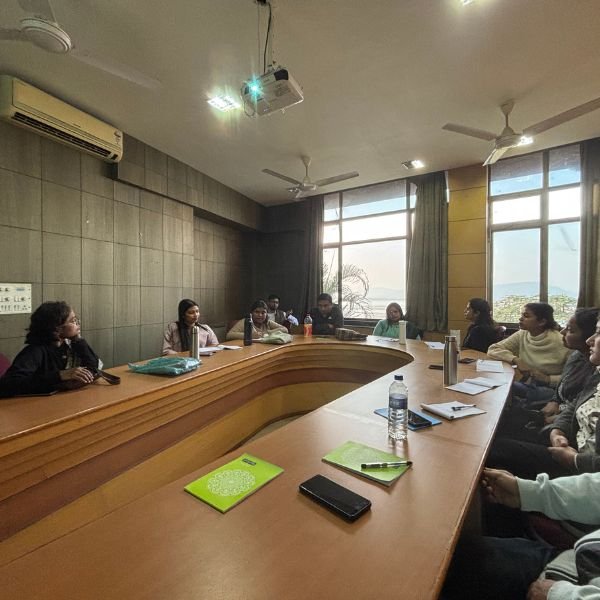
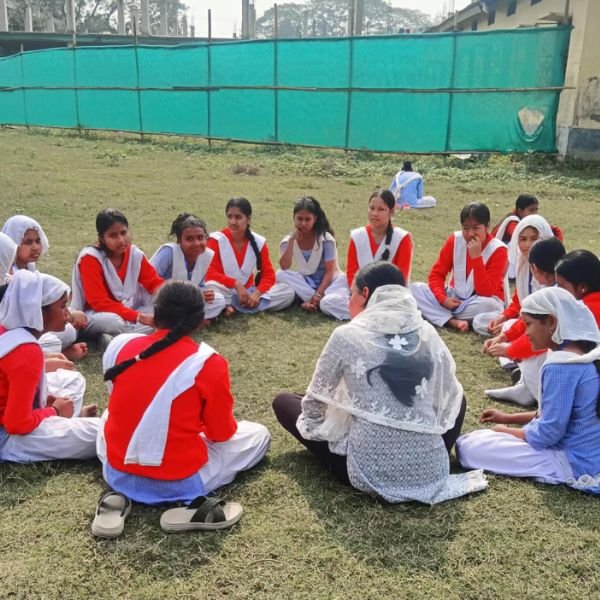
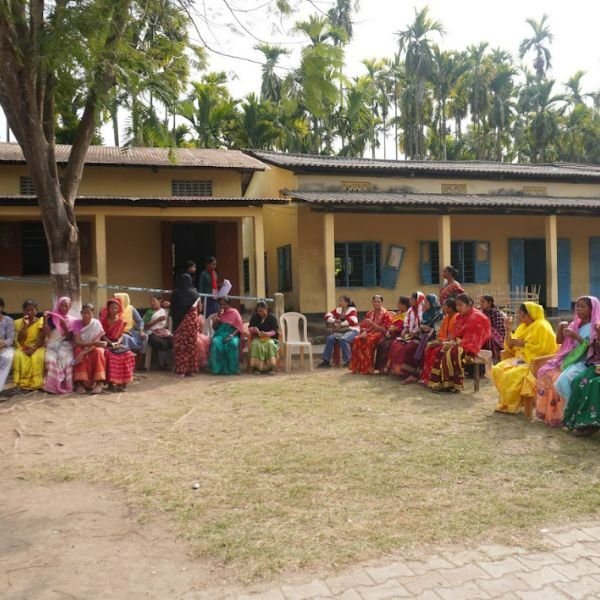
To address these barriers, NEAID, in partnership with UNICEF, is implementing the STEM for Girls Program across marginalized communities in eight districts of Assam. The program works with girls in Grades 6–9 through Kasturba Gandhi Balika Vidyalayas (KGBVs) and nearby government schools, integrating STEM education with life-skills development. Grounded in rigorous needs assessments and co-created with teachers and State Resource Groups, the curriculum is evidence-based, locally relevant, and age-appropriate, and is being designed in close engagement with SCERT for integration into the state curriculum.
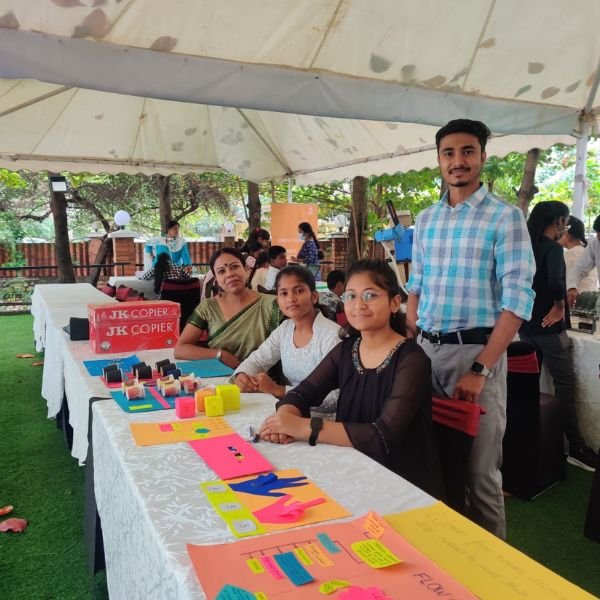
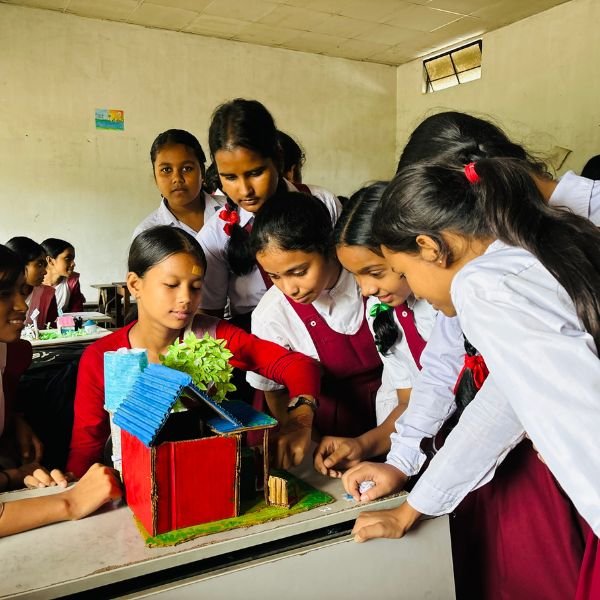
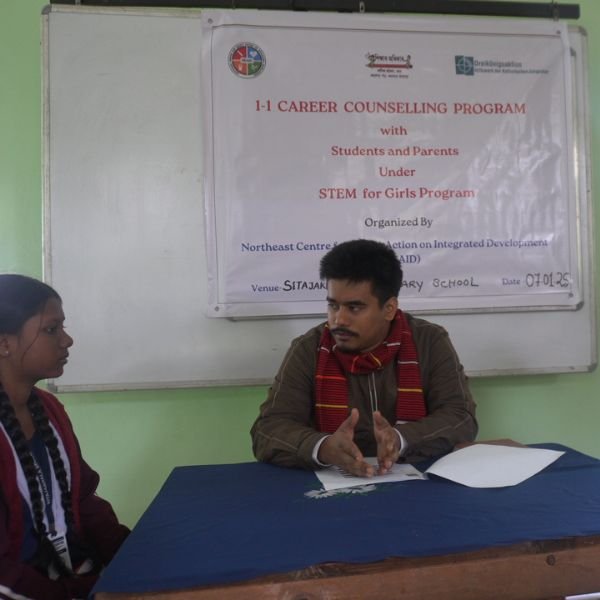
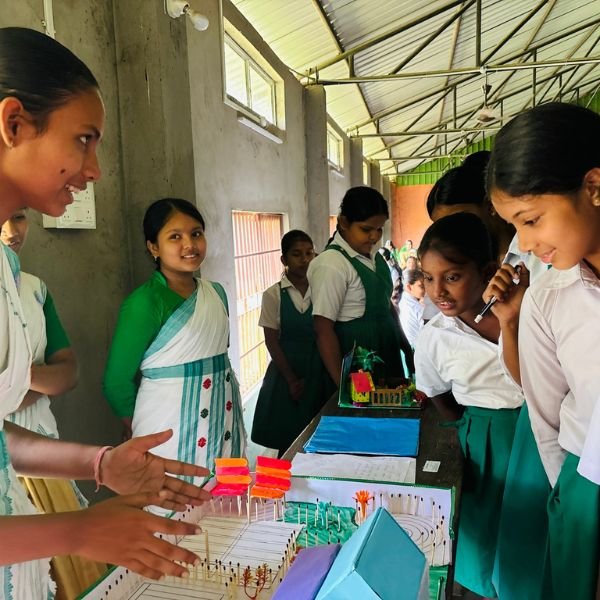
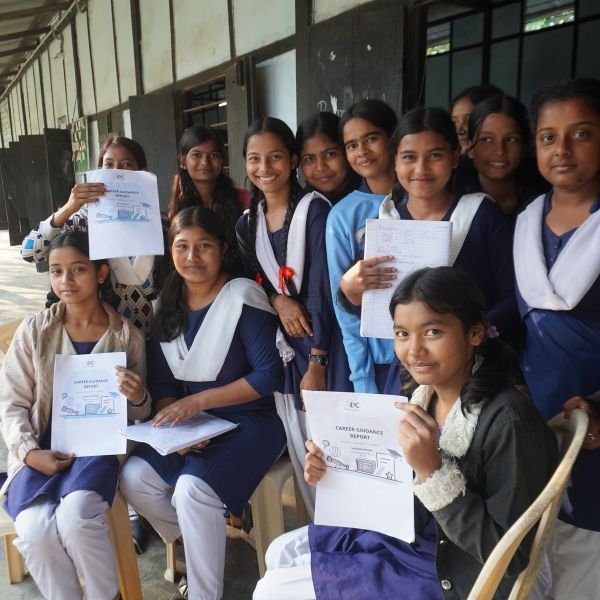
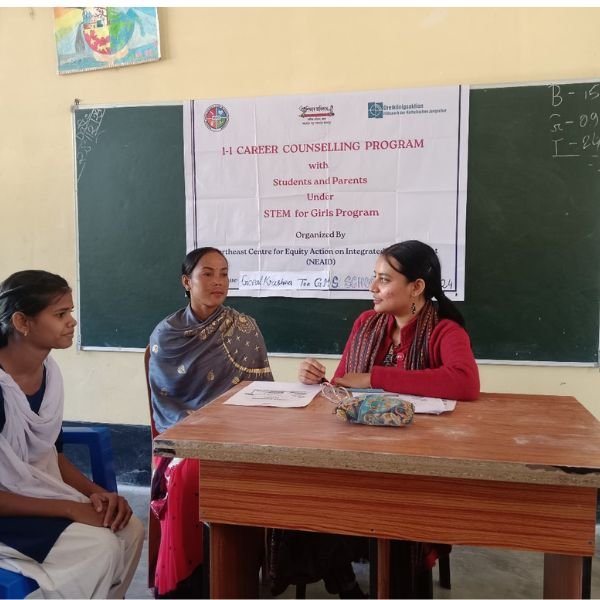
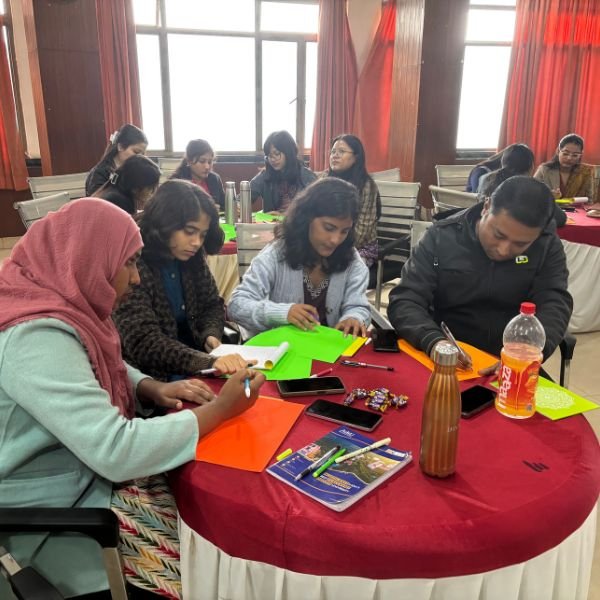
Additionally, through our STEM program, we establish STEM labs that enable students to engage in hands-on, project-based learning. Through STEM lab sessions and community hackathons, girls apply design thinking to identify real challenges in their communities and develop and implement practical solutions. This experiential learning is complemented by comprehensive career counselling, including psychometric assessments, group sessions, one-on-one guidance, and customised career plans that expose girls to diverse STEM and non-STEM career pathways. Field implementation is led by NEAID fellows in close collaboration with schools and district authorities, empowering girls to build confidence, strengthen their STEM mindset, and imagine, prepare for, and pursue futures in STEM on their own terms.